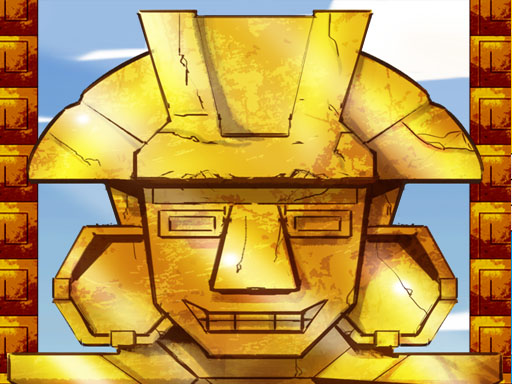
Dragon Funtion
- Arcade
- Landscape
- 800 × 600
- Free to play
Scoring well at Dragon Funtion requires reading the pattern two or three moves ahead, not reacting to what is directly in front of you, which is the same skill every great arcade player develops.

Dragon Funtion is embedded from a licensed HTML5 distribution partner and remains the property of its developer.
Inside Dragon Funtion
Merge Dragons and Build the Ultimate Dragon Collection! Discover a world full of amazing dragons! Merge identical dragons to evolve them into bigger, stronger, and more majestic creatures.
Every evolution brings you one step closer to completing your collection. Unlock dozens of unique dragons, including rare and special dragons waiting to be discovered. Keep merging, collecting, and expanding your Dragon Collection as you uncover every evolution.
Score chains and multipliers in arcade titles reward consistent play over individual spectacular moments; a clean run of many small, well-executed steps almost always beats an inconsistent run with occasional high-value plays. Memorisation and reaction work together in arcade games: early stages train the patterns, later stages demand that the patterns be executed under time pressure that makes conscious recall impossible.
How to play Dragon Funtion
Dragon Funtion runs on a single pointer input: click with a mouse or tap with a finger, and nothing else is required.
What the game asks of you:
- Tap and hold a dragon then drag it onto a dragon of the same level to merge Recomendada.
- Hold and drag a dragon onto another dragon of the same level.
- Drag a dragon onto another of the same level to merge.
- Tap hold and drag a dragon to a matching dr.
On phones and tablets, on-screen touch input takes over. Turning the device to landscape gives the play area more room, which matters in an arcade game where you need to see what is coming. Use the fullscreen button above the frame if you want the game to fill your display.
Tips for a better run
Dragon Funtion rewards score chaining more than raw speed, and a few habits separate a short run from a long one.
- Use lives or continues as learning resources in difficult patterns: spend a life deliberately on learning a new section rather than playing conservatively and hitting the same wall repeatedly.
- Platform jumps in classic platformers should be committed; hesitating at the edge of a jump while the timing window closes costs more than a slightly early attempt that can be adjusted mid-air.
- Chain bonuses and score multipliers by maintaining the current mechanic without interruption; breaks in the chain, even brief ones, usually reset the multiplier to its baseline and cost more than the cautious move saved.
- Understand the collision model of the game in the first thirty seconds: whether corner-grazing counts as a hit, whether the hitbox is the sprite or smaller, and how close to obstacles you can safely pass.
- Collect bonuses or power-ups only when the path to them does not expose you to the primary threat; a score bonus that requires crossing three enemies is often negative value when the lost life is accounted for.
Technical details
| Category | Arcade |
|---|---|
| Style | click, level |
| Technology | HTML5 / WebGL — runs in the browser |
| Screen orientation | Landscape (horizontal) |
| Native resolution | 800 × 600 |
| Touch support | Limited — keyboard recommended |
| Skills exercised | score chaining, reflexive input timing |
| Added to library | 8 July 2026 |
| Tags | Click, Level |
FAQ
Is there a way to practice specific hard sections in Dragon Funtion?
Most arcade games do not have section-select options; the structure requires playing from the beginning. The practical equivalent is intentionally reaching the difficult section as quickly and consistently as possible each run, using early sections as a warm-up routine rather than trying to play them perfectly.
Why do arcade games like Dragon Funtion still feel fun when the mechanics are simple?
Simple mechanics with a visible scoring response create tight feedback loops: action, consequence, and score change happen within milliseconds of each other. That immediacy of feedback is genuinely satisfying at a neurological level and does not require complexity to produce engagement.
What should I move to after getting good at Dragon Funtion?
Maze and chase games extend the spatial pattern-reading skill. Brick-breaking games add angle calculation. Classic platformers demand jump-timing precision. Pinball simulates a physical system rather than a digital pattern. All use the same basic skill vocabulary with different emphasis.
What should I do if Dragon Funtion will not load?
Start with a hard refresh, then check for a script or ad blocker interfering with the game frame. A different browser or a non-restricted network resolves most remaining cases; if it persists, the game may be temporarily down at the source.
Will my progress in Dragon Funtion be kept?
Where a game supports it, progress is written to your browser's own storage and survives a page reload. It will not follow you to another device or browser, and clearing site data wipes it.
One more attempt is rarely one too many in an arcade format: the loop is short, the information is dense, and the next run always starts a little sharper than the last.